Source Used Air Suspension Tractor Truck for Mining, Logistics, and Construction
Find 30 used air suspension tractor truck listings from Chinese manufacturers. Buyers can compare specifications including horsepower, load capacity, and emission standards to identify suitable commercial vehicles for heavy-duty transport.
Key considerations
Products List


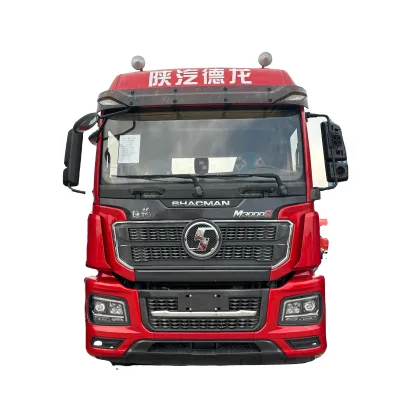


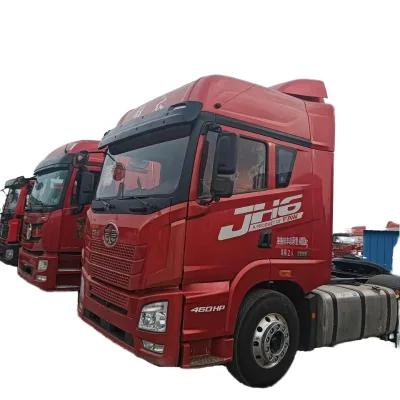
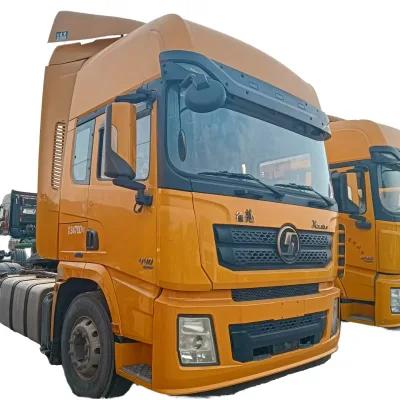
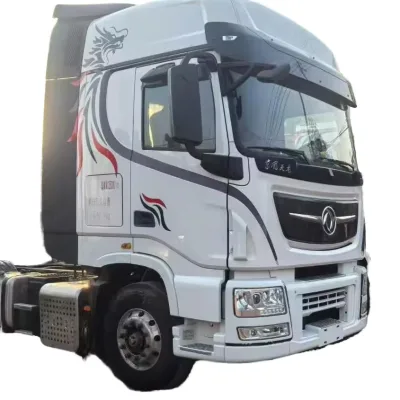


Comprehensive Sourcing Guide
Strategic Sourcing Guide for Used Air Suspension Tractor Trucks
Understanding the Market Landscape and Product Definitions
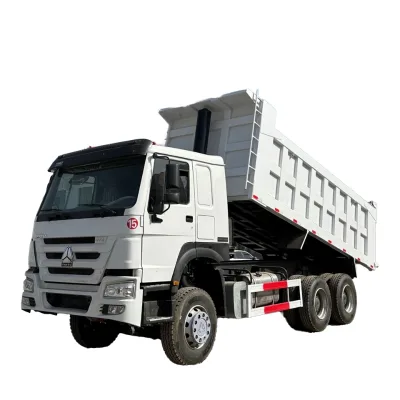
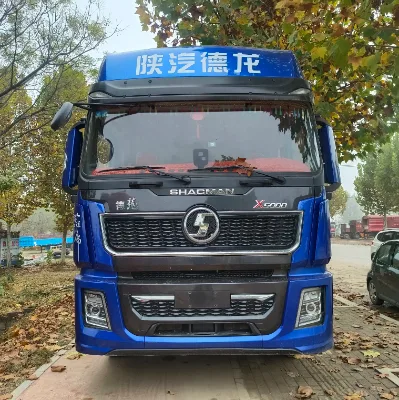
The global market for heavy-duty commercial vehicles includes a significant segment dedicated to pre-owned assets, specifically the used air suspension tractor truck. While the core keyword focuses on air suspension, the available inventory data reveals a complex landscape where "used tractor" and "used truck" models are often categorized alongside specific configurations like the HOWO used dump truck. Buyers must navigate a market where product attributes vary significantly between listings. The observed product count indicates a robust supply of 30 distinct units, suggesting a healthy but fragmented market.
A critical distinction in this sector is the condition of the vehicle. The data explicitly lists products as both "Used" and "New," which can create confusion during the initial screening phase. For a buyer seeking a used air suspension tractor, it is essential to filter strictly for the "Used" condition attribute to avoid misinterpretation of new inventory. Furthermore, the term "tractor" in this context often overlaps with "tractor head 6x4" specifications. The supply chain data indicates that these units are predominantly sourced from China, with specific origins noted in Shandong China. This geographic concentration implies that logistics and shipping methods, such as RO-RO (Roll-on/Roll-off) or standard sea transportation packages, will be primary considerations for international procurement.
The observed price range for these assets spans from 2,000 to 39,999 USD. This wide variance suggests that the market accommodates both entry-level units with higher mileage and premium, lower-mileage assets with advanced features. The Minimum Order Quantity (MOQ) is consistently observed at 1 unit, offering flexibility for individual buyers or small fleets looking to expand without committing to bulk purchases. However, the presence of customization options indicates that buyers can request specific modifications to meet local regulatory or operational needs, a factor that should be integrated into the initial specification sheet.
Technical Specifications and Configuration Analysis
When evaluating a used air suspension tractor truck, the technical specifications provide the foundation for operational suitability. The data highlights several key performance metrics that define the capabilities of these vehicles. The horsepower range is observed between 351 and 450 hp, which is typical for heavy-haul applications requiring significant torque to manage steep grades and heavy loads. Correspondingly, the engine capacity is noted as greater than 8 liters, with some entries specifying ranges between 4-6 liters, indicating a mix of engine sizes available in the current inventory.
The transmission system is a critical component for efficiency and driver comfort. The available data points to a manual gearbox with 12 gears, paired with integral power steering. This configuration is standard for heavy-duty tractors, offering the driver precise control over gear selection to optimize fuel consumption and engine braking. The drive wheel configuration is frequently listed as 6×4, a robust setup that provides the necessary traction for off-road conditions and heavy commercial usage. The axle number is specified as 3 or 4, which directly correlates with the load capacity requirements of the buyer.
Load capacity is a defining characteristic of these tractors. The inventory shows a diverse range of capacities, from 21-30 tons up to 41-50 tons. This variation means that a buyer must align the vehicle's rated capacity with their specific cargo requirements. For instance, a fleet specializing in construction materials might require the 41-50t range, while a logistics provider moving general freight might find the 21-30t range more cost-effective. The wheelbase is also a critical dimension, with specific measurements like 3150+1410mm noted, which affects the vehicle's maneuverability and the type of trailer it can effectively pull.
| Specification Category | Observed Data Points | Procurement Implication |
|---|---|---|
| Horsepower | 351-450hp | Ensures sufficient power for heavy loads and inclines. |
| Engine Capacity | >8L, 4-6L | Verify specific engine size for fuel efficiency calculations. |
| Drive Configuration | 6×4 | Standard for heavy haul; verify axle count (3 or 4). |
| Gearbox | Manual, 12 Gears | Requires skilled drivers; offers precise control. |
| Load Capacity | 21-30t, 31-40t, 41-50t | Match capacity to intended cargo type and weight. |
| Mileage | >100,000 km | Indicates significant wear; requires thorough inspection. |
| Condition | Used / New | Filter strictly for "Used" to meet core keyword intent. |
Compliance, Certification, and Regulatory Standards
Navigating the regulatory landscape is paramount when importing used heavy vehicles. The supply data references several tire certifications, including ECE, GCC, ISO, and DOT. These acronyms represent different regional standards: ECE for Europe, GCC for the Gulf Cooperation Council, ISO for international standards, and DOT for the United States. A buyer must verify that the specific unit they intend to purchase holds the certifications required for their destination country. For example, a truck destined for the European market must possess valid ECE certification, while one for the US market requires DOT compliance.
The emission standards are another critical compliance factor. The data mentions "Euro Engine Capacity" with references to Euro standards, though specific Euro levels (e.g., Euro 5, Euro 6) are not explicitly quantified in the provided text. However, the presence of "Euro" in the specification implies adherence to European emission norms. Buyers should explicitly request the emission certificate for the specific chassis to ensure it meets local environmental regulations, as many jurisdictions have strict bans on older emission standards.
Additionally, the product standard dimensions are listed in various formats, such as 6800x2490x3668mm and 6985x2496x3050mm. These dimensions likely refer to the overall length, width, and height of the vehicle or specific components. Compliance with local road width and height restrictions is essential to avoid fines or operational bans. The "Naked" packing option suggests that some units may be shipped without a protective crate, which can impact the vehicle's condition during transit and requires careful handling protocols to prevent damage to the air suspension system.
Cost Drivers and Total Cost of Ownership
The observed price range of 2,000 to 39,999 USD indicates that the initial purchase price is only one component of the total cost of ownership (TCO). Several factors drive the final cost of acquiring and operating a used air suspension tractor truck. First, the mileage is a primary cost driver. The data indicates that most units have a mileage exceeding 100,000 km. Higher mileage typically correlates with a lower purchase price but a higher risk of immediate maintenance costs, particularly for the air suspension system, which is a complex and expensive component to repair.
The service life of these vehicles is estimated at 6-10 years. This range suggests that a used unit may have already consumed a significant portion of its operational lifespan. Buyers must calculate the remaining service life based on the current mileage and the expected annual usage. A unit with 100,000 km and a 6-year service life might have less remaining value than a unit with the same mileage but a 10-year service life, depending on the maintenance history.
Fuel type is another cost consideration. The inventory specifies Diesel as the fuel source. Diesel prices fluctuate, and the engine capacity (ranging from 4-6L to >8L) directly impacts fuel consumption. Larger engines generally offer more power but consume more fuel, which can significantly affect the TCO over the vehicle's remaining life. Additionally, the "Customization" availability mentioned in the data can add to the upfront cost. If a buyer requires specific modifications to meet local regulations or operational needs, these customization fees must be factored into the budget.
Shipping and logistics also play a major role in the final cost. The data lists various packing methods, including "Naked," "Standard Package for Sea Transportation," and "RO-RO." The choice of shipping method depends on the vehicle's dimensions and the buyer's preference for protection versus cost. RO-RO shipping is often more economical for operational vehicles, while standard packages may be necessary for units requiring additional protection. The origin location, specifically Shandong China, influences the freight distance and associated costs, which should be calculated based on the buyer's port of entry.
Typical Applications and Operational Suitability
The usage profile of these vehicles is explicitly defined as "Commercial Vehicle," with a specific mention of "off-Road" conditions. This indicates that the used air suspension tractor trucks are designed for rugged environments, such as construction sites, mining operations, or unpaved industrial zones. The mechanical braking system and the robust 6×4 drive configuration support this application, providing the necessary stopping power and traction for challenging terrains.
The load capacity data, ranging from 21 to 50 tons, further clarifies the intended applications. Units with higher load capacities (41-50t) are likely suited for heavy construction haulage, transporting materials like gravel, sand, or ore. In contrast, units with lower capacities (21-30t) might be more appropriate for general logistics or lighter construction tasks. The "Front Lifting Style" dumping type mentioned in the data suggests that some units may be configured as dump trucks or tractor-dump combinations, which are essential for bulk material transport.
The "Integral Power Steering" and "Manual Gearbox" with 12 gears are particularly relevant for commercial applications requiring frequent stops and starts, such as in urban construction zones or industrial yards. The air suspension system, while not explicitly detailed in the provided text, is implied by the core keyword and is crucial for protecting cargo and reducing driver fatigue on long hauls. However, buyers should verify the condition of the air suspension components, as wear and tear in off-road conditions can be significant.
Supplier Evaluation and Quality Control Protocols
When evaluating suppliers for used tractor trucks, buyers must rely on the available product attributes rather than unverified claims. The data confirms that customization is available, which is a positive indicator of a supplier's flexibility. However, the presence of conflicting condition tags ("Used" and "New") necessitates a rigorous verification process. Buyers should request detailed inspection reports that confirm the "Used" status and provide a history of the vehicle's maintenance.
Quality control should focus on the critical systems identified in the data. The braking system is listed as "Mechanical," which requires a thorough inspection of the brake pads, drums, and lines. The engine capacity and horsepower should be verified through a compression test and a diagnostic scan to ensure the engine is operating within the specified 351-450 hp range. The tire design, noted as "Tubeless" or "Radial," should be inspected for tread depth and signs of uneven wear, which could indicate alignment issues or suspension problems.
The "Seat Capacity" and "Seat" attributes in the data are somewhat ambiguous, with mentions of "20~30 Tons" and "Seats: ≤Tire Certification." This suggests that the data might be conflating load capacity with seating arrangements. Buyers should physically verify the number of seats and the condition of the cabin interior. The "Color" is listed as "Optional," which implies that buyers can request specific paint jobs, but this should be confirmed with the supplier to avoid discrepancies.
Long-Term Procurement and Asset Management
Procuring a used air suspension tractor truck is a long-term investment that requires careful planning for asset management. The service life of 6-10 years means that the buyer must plan for major overhauls and component replacements. The "Product Name" variations, such as "Second Hand Used Truck" and "HOWO Used Dump Truck," indicate that the market is dynamic, and buyers should stay informed about model updates and availability.
The "Wheel Base" and "Axle Number" are critical for long-term compatibility with trailers and equipment. A mismatch in these specifications can lead to operational inefficiencies and increased wear. Buyers should ensure that the selected tractor matches the trailer specifications of their existing fleet. Additionally, the "Emission Standard" compliance must be monitored, as regulations are tightening globally. A truck that is compliant today may become non-compliant in a few years, affecting its resale value and operational eligibility.
Finally, the "Standard Package for Sea Transportation" and "RO-RO" options highlight the importance of logistics in the long-term success of the procurement. Buyers should establish a relationship with a reliable freight forwarder who understands the nuances of shipping heavy vehicles. This ensures that the vehicle arrives in the condition expected, minimizing the risk of damage during transit. By focusing on these long-term considerations, buyers can maximize the value of their investment in used air suspension tractor trucks.
FAQs
What is the typical horsepower range for these trucks?
The typical horsepower range for these trucks is between 351 and 450 hp. This power output supports heavy haul applications and ensures sufficient torque for steep grades and off-road conditions.
Which load capacities are available for these used tractors?
Available load capacities range from 21 to 50 tons across the inventory. Buyers should match the 21-30t, 31-40t, or 41-50t options to their specific cargo weight requirements.
Can buyers request customization for these commercial vehicles?
Yes, customization is available for these commercial vehicles to meet local regulatory or operational needs. Buyers can request specific modifications to the standard 6x4 configuration or engine specifications.
How is the gearbox configured in these used trucks?
The gearbox is configured as a manual transmission with 12 gears. This setup provides drivers with precise control over gear selection to optimize fuel consumption and engine braking during operation.
What certifications are available for the tires on these trucks?
Tire certifications include ECE, GCC, ISO, and DOT depending on the specific listing. Buyers must verify that the unit holds the specific certification required for their destination country.
Where are these used tractor trucks primarily sourced from?
These used tractor trucks are primarily sourced from China, with specific origins in Shandong. This geographic concentration influences logistics and shipping methods like RO-RO or standard sea transportation.
What is the estimated service life of these diesel vehicles?
The estimated service life of these diesel vehicles is between 6 and 10 years. Buyers should calculate the remaining operational lifespan based on the current mileage and maintenance history.